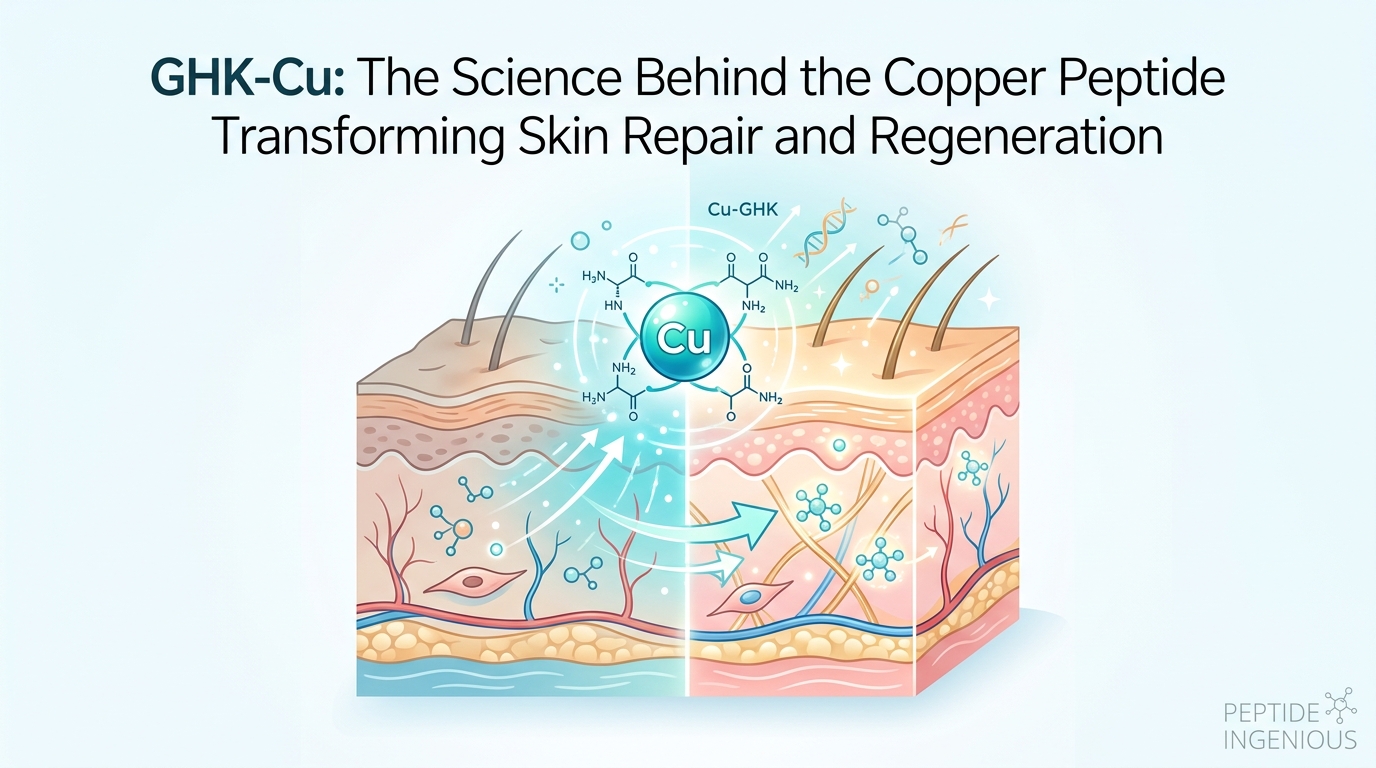
GHK-Cu: The Science Behind the Copper Peptide Transforming Skin Repair and Regeneration
October 1, 2026
- Introduction
- What does topical effectiveness actually mean?
- How Long Does GHK-Cu Take to Work?
- Why there is no standard timeline
- What about claims of rapid skin transformation?
- GHK-Cu and Hair Growth: What Is Known?
- Why researchers investigate copper peptides and hair
- Can GHK-Cu treat hair loss?
- GHK-Cu and Anti-Aging: Separating Science From Marketing
- What causes visible skin aging?
- What anti-aging benefits have been investigated?
- How should anti-aging claims be interpreted?
- What Is GHK-Cu?
- What Does GHK-Cu Do?
- What Does GHK-Cu Stand For?
- Is GHK-Cu Natural?
- What Are the Benefits of GHK-Cu?
- Does Topical GHK-Cu Work?
- Does GHK-Cu Stimulate Collagen and Elastin?
- Does GHK-Cu Help With Wound Healing?
- How Long Does GHK-Cu Take to Work?
- Does GHK-Cu Help With Hair Growth?
- Does GHK-Cu Cause Cancer?
- Is GHK-Cu Safe for Long-Term Use?
- How Is GHK-Cu Used in Skincare?
- Featured Snippet Answer:
GHK-Cu, or glycyl-L-histidyl-L-lysine copper, is a copper-binding tripeptide consisting of three amino acids: glycine, histidine, and lysine. GHK occurs naturally in human biological systems and has attracted scientific interest for its potential roles in tissue remodeling, skin biology, and wound-healing pathways. Laboratory research suggests that GHK-Cu may influence collagen-related processes and cellular signaling. However, promising experimental findings do not establish that it reliably reverses skin aging, stimulates hair growth, or accelerates wound healing in humans. Evidence and safety also vary by formulation and route of exposure.
Introduction
GHK-Cu has attracted considerable attention in skincare, cosmetic science, and regenerative research because of its relationship with copper and its potential involvement in biological processes associated with tissue maintenance. Often called a copper peptide, GHK-Cu is being investigated for its possible effects on collagen-related pathways, extracellular matrix remodeling, inflammation, and skin repair.
Interest in this molecule extends beyond its biochemical properties. Cosmetic brands frequently associate GHK-Cu with smoother-looking skin, improved elasticity, reduced visible signs of aging, and skin regeneration. Hair-care products and experimental research have also contributed to its growing visibility. However, these applications do not all have the same scientific foundation.
Understanding what GHK-Cu actually does requires separating several distinct questions. Can it influence cellular processes in laboratory models? Does it improve measurable skin characteristics in people? Can findings from topical cosmetic studies be applied to wound healing or hair loss? And does evidence from one formulation establish the safety of another?
These distinctions matter because biological activity does not automatically translate into a meaningful clinical benefit. A peptide may interact with pathways involved in tissue repair without being an effective treatment for a skin condition.
This article examines GHK-Cu's molecular identity, proposed mechanisms, potential applications, clinical evidence, and safety limitations. It distinguishes established biochemical properties from experimental findings and commercial claims, providing a balanced overview of what current research can—and cannot—demonstrate.
What Is GHK-Cu?
GHK-Cu is a copper-binding tripeptide composed of three amino acids: glycine, histidine, and lysine. Its name, glycyl-L-histidyl-L-lysine copper, describes the peptide sequence and its association with copper. Researchers study this complex because of its biochemical properties and its potential involvement in tissue remodeling and skin-related cellular processes.
Understanding the GHK peptide
GHK is a tripeptide, meaning it contains three amino acids joined by peptide bonds. Its sequence is:
- Glycine (G): The smallest amino acid, which contributes flexibility to peptide structures.
- Histidine (H): An amino acid whose imidazole group can coordinate metal ions, including copper.
- Lysine (K): An amino acid with a positively charged side chain under physiological conditions.
The letters GHK represent the amino acid sequence, not three separate ingredients. When GHK binds copper ions, particularly copper in its divalent form (Cu²⁺), the resulting complex is called GHK-Cu.
What makes GHK-Cu a copper peptide?
A copper peptide is a peptide capable of binding copper ions. Copper is an essential trace element involved in numerous biological processes, including the activity of enzymes responsible for connective-tissue formation, antioxidant defense, and cellular metabolism.
GHK can coordinate copper through its amino acid groups. However, copper binding should not be confused with unrestricted copper delivery to cells. The biological consequences of a copper complex depend on its chemical environment, stability, concentration, and interactions with other molecules.
GHK-Cu is a specific copper–peptide complex. It is not interchangeable with every copper-containing skincare ingredient or every peptide marketed for skin health.
GHK versus GHK-Cu
Although the terms are sometimes used interchangeably in cosmetic discussions, GHK and GHK-Cu are chemically distinguishable.
| Characteristic | GHK | GHK-Cu |
|---|---|---|
| Composition | Three-amino-acid peptide | GHK associated with copper |
| Copper | Not necessarily bound | Copper is coordinated |
| Biological interest | Peptide signaling and binding | Copper-related and peptide-associated activity |
| Research applications | Biochemical and cellular research | Skin biology, tissue remodeling, and wound-healing models |
| Cosmetic terminology | Peptide ingredient | Copper peptide ingredient |
This distinction is particularly relevant when interpreting research. A study investigating GHK alone does not automatically establish the same effects for a specific GHK-Cu formulation.
Is GHK-Cu Natural?
GHK is naturally present in human biological fluids, including plasma, saliva, and urine. Researchers have investigated its relationship with copper and tissue remodeling. However, a naturally occurring peptide and a commercially manufactured copper-peptide product are not necessarily equivalent in their exposure, concentration, formulation, or biological effects.
GHK in the human body
GHK has been studied as a naturally occurring peptide involved in biological processes associated with tissue maintenance. Its presence in human fluids provides a reason to investigate its physiological significance, but it does not establish that externally applied GHK-Cu reproduces a natural biological function.
GHK can bind copper, and copper is essential for several enzymes involved in connective-tissue biology. Nevertheless, the body's regulation of copper involves multiple transport proteins and metabolic pathways. It would be an oversimplification to describe GHK-Cu as a direct replacement for the body's natural copper-handling system.
Do GHK-Cu levels decline with age?
A frequently repeated claim in skincare discussions is that GHK concentrations decline substantially as people age. This claim originates largely from older research and subsequent reviews. The often-quoted numerical comparisons should not be interpreted as a universal, independently established measure of GHK-Cu concentrations throughout the aging population.
More importantly, evidence of an age-related change in circulating GHK would not, by itself, demonstrate that replacing it reverses aging or improves skin health.
Age-related skin changes are influenced by several factors, including ultraviolet exposure, changes in collagen metabolism, hormonal influences, genetics, and environmental exposures. A single peptide cannot be assumed to account for these complex processes.
Natural occurrence versus manufactured formulations
Commercial GHK-Cu is generally produced for use in formulated products or experimental preparations. A manufactured product may contain the same intended molecular complex, but its purity, stability, concentration, and delivery characteristics depend on its production and formulation.
Natural occurrence also does not establish that a substance is safe by every route of administration. The body tightly regulates the movement of copper and other biologically active molecules. Externally applying or injecting a compound creates a different exposure from the amount naturally present in bodily fluids.
The most accurate description is therefore that GHK is naturally occurring, while individual commercial GHK-Cu preparations are manufactured products whose quality and effects must be assessed separately.
How Does GHK-Cu Work? Mechanism of Action
GHK-Cu is investigated for its potential to influence several biological processes involved in tissue remodeling. Research has examined copper binding, extracellular matrix proteins, cellular signaling, and inflammatory pathways. However, these findings do not establish that GHK-Cu activates one universal regeneration mechanism or produces the same outcomes in every tissue.
Copper binding and biochemical activity
Copper is a cofactor for enzymes involved in essential biological functions. One example is lysyl oxidase, a family of copper-dependent enzymes involved in cross-linking collagen and elastin. These cross-links contribute to the mechanical strength and organization of connective tissue.
Because GHK binds copper, researchers have investigated whether GHK-Cu could influence copper-related biological processes. Yet binding copper is not equivalent to delivering it selectively to a particular enzyme. The availability of copper depends on complex cellular transport and regulation.
The presence of copper in a peptide complex therefore provides a biochemical rationale for investigation, not proof of improved skin structure.
Extracellular matrix remodeling
The extracellular matrix (ECM) is the network of proteins and other molecules surrounding cells. In skin, it helps provide structural support, elasticity, and an environment in which cells can communicate.
Collagen, elastin, and proteoglycans are important ECM components. Laboratory studies and reviews have reported that GHK-Cu can influence the production or breakdown of certain matrix components, including collagen and glycosaminoglycans, in specific experimental systems. It has also been investigated in relation to matrix metalloproteinases and their inhibitors.
This is significant because healthy tissue remodeling requires a balance between producing, organizing, and removing extracellular matrix components. More collagen is not automatically better: the organization, cross-linking, and turnover of the matrix also matter.
Cellular signaling and gene expression
Researchers have used gene-expression databases and laboratory experiments to investigate the effects of GHK on cellular activity. Some studies report changes in the expression of genes associated with inflammation, cellular stress, and tissue remodeling.
Gene-expression changes can help identify pathways worth investigating. They do not establish that every affected gene produces a beneficial effect in living humans. Results can depend on the experimental model, exposure conditions, and cells examined.
Inflammation and oxidative stress
Inflammation is a necessary part of wound healing, but excessive or prolonged inflammation can interfere with normal repair. Oxidative stress occurs when reactive molecules exceed the body's ability to manage them.
Experimental GHK-Cu research has investigated antioxidant enzymes, inflammatory mediators, and oxidative-stress-related signaling. These findings have generated interest in the peptide's potential role in tissue protection.
However, an effect on a marker in a laboratory model is not proof that a topical product treats inflammatory skin disease or prevents tissue damage in humans.
Key distinction: GHK-Cu may influence biological pathways associated with tissue remodeling in experimental models. Whether those changes produce a meaningful improvement in human skin, wounds, or hair growth is a separate clinical question.
GHK-Cu Benefits: What Does the Research Actually Show?
The potential benefits of GHK-Cu include improved skin appearance, collagen-related activity, wound-healing effects, and hair-related applications. Evidence is uneven across these areas. Laboratory and animal findings provide a basis for further study, while human evidence is more limited and often specific to the product and outcome examined.
Skin appearance and photoaging
Small cosmetic studies have reported improvements in some measures of skin appearance following topical copper-peptide use. A 2015 review described studies involving women with signs of photoaging in which researchers reported changes in skin firmness, elasticity, wrinkles, and skin density.
These results are of interest, but the strength of the evidence is limited by the size, age, and reporting quality of the underlying studies. A result reported in a small cosmetic study does not necessarily predict the performance of other formulations available today.
Photoaging also varies considerably between individuals. Differences in ultraviolet exposure, baseline skin condition, product formulation, and study methods make it difficult to compare results across trials.
Collagen and elastin
GHK-Cu has been investigated for its effects on collagen and other extracellular matrix components. Laboratory studies suggest that it can influence processes related to collagen production and matrix turnover.
However, collagen production is only one component of healthy skin structure. Collagen must be organized and maintained appropriately, and visible changes also depend on the condition of elastin, hydration, pigmentation, and other tissue characteristics.
Evidence of a biochemical effect should therefore not be translated directly into a promise of firmer skin or fewer wrinkles.
Wound healing
Animal and laboratory studies have examined GHK-Cu in relation to cell migration, tissue remodeling, collagen deposition, and wound closure. These studies suggest that the peptide may affect several processes involved in repair.
However, wound healing is a complex clinical outcome. Healing rates depend on wound type, blood supply, infection, underlying disease, wound depth, and appropriate care. An experimental effect in an animal wound model does not demonstrate that GHK-Cu treats chronic ulcers or improves surgical outcomes in people.
Inflammation and oxidative stress
Experimental research has reported effects involving oxidative-stress-related pathways and inflammatory signaling. These observations help explain why GHK-Cu is being investigated as a potential tissue-protective molecule.
They do not establish GHK-Cu as a treatment for inflammatory skin disorders, nor do they prove that cosmetic products containing it prevent oxidative skin damage.
Hair and scalp research
GHK-Cu has been discussed in relation to hair follicles, follicular size, and hair transplantation. Much of the proposed benefit comes from mechanistic discussions and preclinical research rather than large, well-controlled clinical trials demonstrating meaningful hair regrowth.
Hair growth is affected by genetics, hormones, inflammation, nutrition, and the hair-growth cycle. Evidence involving one experimental model cannot establish efficacy for androgenetic alopecia or other common causes of hair loss.
Evidence snapshot
| Potential benefit | Current interpretation |
|---|---|
| Skin appearance | Limited, formulation-specific human findings |
| Collagen-related activity | Promising experimental evidence |
| Skin regeneration | Primarily mechanistic and preclinical evidence |
| Wound healing | Substantial experimental interest; limited clinical validation |
| Hair growth | Insufficient evidence to establish a treatment |
| Anti-aging | Some cosmetic findings, but no proof of biological age reversal |
GHK-Cu and Skin Regeneration
GHK-Cu is associated with skin regeneration because researchers have investigated its potential effects on cells and molecules involved in skin maintenance and repair. These include fibroblasts, collagen-related pathways, and extracellular matrix remodeling. However, regeneration in a laboratory model is not equivalent to restoring damaged human skin or reversing the visible effects of aging.
What does skin regeneration mean?
Skin regeneration is a broad term that can refer to the restoration of tissue structure and function following injury. It is related to, but not identical to, ordinary skin maintenance, wound healing, and cosmetic rejuvenation.
The skin contains several interacting cell types and structural components. Fibroblasts produce and maintain much of the dermal extracellular matrix, while keratinocytes contribute to the epidermal barrier. Blood vessels, immune cells, and other structures also participate in tissue repair.
During normal wound healing, the body coordinates inflammation, new tissue formation, and remodeling. The result depends on how these processes interact, not simply on the activity of one peptide.
GHK-Cu and skin-related cellular activity
Experimental research suggests that GHK-Cu can affect fibroblast activity and the production or breakdown of extracellular matrix components. Studies have also examined its influence on keratinocytes and other cells involved in repair.
These findings provide a scientific basis for investigating GHK-Cu in skin-related applications. Nevertheless, cell-culture experiments typically use controlled conditions that do not reproduce the full complexity of living skin.
The skin barrier, local enzyme activity, peptide degradation, and interactions with other ingredients can all affect whether a topical preparation reaches the relevant tissue in a biologically active form.
Skin regeneration versus skin rejuvenation
The distinction between regeneration and rejuvenation matters when evaluating cosmetic claims.
- Skin maintenance involves normal processes that preserve tissue structure and function.
- Skin remodeling describes changes in the composition and organization of existing tissue.
- Wound healing is the coordinated process through which injured tissue repairs itself.
- Skin rejuvenation is a broad cosmetic term that usually refers to improving visible characteristics, such as texture, firmness, or wrinkles.
- Skin regeneration generally implies restoration of tissue, although its precise meaning depends on the research context.
A product that produces a measurable cosmetic improvement has not necessarily regenerated the underlying tissue. Likewise, a change in a laboratory marker does not demonstrate that a person will experience visibly younger-looking skin.
GHK-Cu remains an interesting candidate for skin research, but claims about substantial or complete skin regeneration require stronger clinical evidence than mechanistic studies alone can provide.
GHK-Cu and Collagen, Elastin, and Wound Healing
GHK-Cu research frequently focuses on collagen, elastin, and wound healing because these processes are closely connected to tissue structure and repair. Experimental findings suggest that the peptide can influence some components of the extracellular matrix. However, evidence that it improves clinically important wound-healing outcomes in humans remains limited.
Collagen and elastin in healthy skin
Collagen provides much of the skin's tensile strength. It forms a structural framework that helps the dermis withstand mechanical stress. Elastin contributes to elasticity, allowing skin to stretch and return toward its original shape.
Both proteins are embedded in an extracellular matrix that also contains proteoglycans, glycosaminoglycans, and other molecules. Fibroblasts help produce and maintain this environment.
As skin ages, changes in collagen organization, elastin structure, and matrix turnover contribute to wrinkles and reduced elasticity. Ultraviolet radiation can accelerate these changes through multiple biological pathways.
How GHK-Cu relates to matrix remodeling
Research has examined GHK-Cu's effects on collagen synthesis, glycosaminoglycans, decorin, and enzymes involved in extracellular matrix turnover. The peptide has also been investigated in relation to matrix metalloproteinases, which break down matrix components, and tissue inhibitors of metalloproteinases, which regulate their activity.
These findings suggest that GHK-Cu may influence matrix remodeling rather than simply increase the production of one structural protein.
However, the relationship between these molecular changes and visible skin outcomes remains incompletely established. Collagen measurements, for example, are not interchangeable with objective improvements in skin elasticity or patient-reported appearance.
Wound healing is a separate clinical question
Wound healing occurs through overlapping phases: hemostasis, inflammation, proliferation, and remodeling. The process involves clot formation, immune activity, new tissue development, blood-vessel formation, and changes in the extracellular matrix.
Preclinical studies have examined GHK-Cu in animal wound models, including research involving skin repair and experimentally induced tissue injuries. Such studies have reported changes in healing-related outcomes, but the results depend on the particular model and experimental conditions.
Human wounds introduce additional variables, including diabetes, circulation problems, infection, medication use, and wound depth. An intervention that affects wound closure in an animal model may not provide the same result in a person with a chronic wound.
For this reason, GHK-Cu should not be considered a clinically established replacement for evidence-based wound care. Its proposed wound-healing effects remain a subject for further controlled clinical investigation.
Does Topical GHK-Cu Work?
Topical GHK-Cu may influence skin-related biological processes, and some small cosmetic studies have reported improvements in appearance. However, the evidence does not establish that every copper-peptide serum or cream penetrates the skin sufficiently or produces clinically meaningful benefits. Formulation-specific research is essential when evaluating topical effectiveness.
Why formulation matters
The outermost layer of skin, the stratum corneum, acts as a barrier that restricts the entry of many substances. Peptides can present particular delivery challenges because their size, polarity, and chemical characteristics influence how readily they cross this barrier.
A topical GHK-Cu product therefore involves more than the presence of the named peptide. Its performance may depend on:
- The chemical identity and stability of the copper–peptide complex.
- The vehicle and other formulation ingredients.
- The product's pH and storage conditions.
- The peptide's ability to remain intact during use.
- The amount of biologically active material that reaches the relevant skin layer.
A formulation that performs well in a laboratory experiment cannot automatically be assumed to behave similarly in a finished cosmetic product.
What do human studies show?
Older cosmetic studies have reported improvements in some measures of skin appearance following GHK-Cu application. However, an independent assessment of the literature has highlighted limitations in the available evidence, particularly regarding skin permeability and the lack of adequately documented clinical studies for many commercial formulations.
A small clinical study of a topical copper tripeptide complex following carbon dioxide laser resurfacing illustrates why outcomes must be examined individually. Thirteen participants completed the study. Objective assessments did not show significant advantages for erythema resolution, wrinkles, or overall skin quality compared with the control. Some patient-reported assessments favored the copper-peptide product.
The findings do not establish that all topical GHK-Cu products are ineffective. Equally, they do not justify assuming that topical GHK-Cu reliably accelerates recovery or improves every cosmetic outcome.
What does topical effectiveness actually mean?
A meaningful evaluation needs to specify the outcome. Improvement in hydration, a change in wrinkle appearance, increased collagen markers, and faster healing of a surgical wound are different endpoints.
A study showing improvement in one measure cannot automatically establish improvements in the others. Results from one cream also cannot be generalized to every serum containing GHK-Cu.
The most defensible conclusion is that topical GHK-Cu has promising but limited and formulation-dependent evidence. Larger, well-controlled human studies using clearly characterized products are needed to establish the magnitude and consistency of its cosmetic effects.
How Long Does GHK-Cu Take to Work?
There is no universally established timeframe for GHK-Cu to produce visible results. The time required to observe an effect depends on the formulation, the condition being studied, and the outcome measured. Laboratory changes, cosmetic improvements, and wound-healing outcomes have different time courses and cannot be treated as interchangeable.
Why there is no standard timeline
A biochemical response may occur under controlled laboratory conditions without producing an immediate visible change in skin. Conversely, an improvement in surface hydration can make skin look smoother without demonstrating that collagen has been remodeled.
Cosmetic studies commonly evaluate changes over a defined period, but the results of one study do not establish a standard onset time for every product.
Several factors can affect the interpretation of results:
- The specific GHK-Cu formulation and its stability.
- The skin characteristic being measured.
- The duration and design of the study.
- The accuracy and objectivity of the assessment.
- Differences in participants' skin condition and baseline characteristics.
What about claims of rapid skin transformation?
Online claims sometimes promise visible transformations within a fixed number of days or weeks. Without controlled evidence for the specific product and outcome, such timelines are marketing claims rather than established scientific expectations.
A short-term change in skin appearance also does not necessarily indicate lasting structural remodeling. Likewise, the absence of a noticeable change does not establish what is happening at the molecular level.
For GHK-Cu, the available evidence does not justify a universal promise of visible improvement after a particular number of days or weeks. Claims about a predictable transformation should therefore be evaluated cautiously.
GHK-Cu and Hair Growth: What Is Known?
GHK-Cu has attracted interest in hair research because of proposed interactions with hair-follicle biology and tissue remodeling. However, the evidence supporting its use for hair growth is considerably less established than would be required to consider it a proven treatment for common hair-loss conditions.
Why researchers investigate copper peptides and hair
Hair follicles are complex biological structures with their own growth cycles. Their activity depends on interactions among follicular cells, connective tissue, blood supply, hormones, and local signaling molecules.
Because GHK-Cu has been studied in relation to cellular activity and tissue remodeling, researchers have explored whether it might influence some processes relevant to hair follicles. Preclinical discussions have included follicular size and hair-related growth pathways.
However, biological plausibility is not sufficient evidence of effective hair regrowth.
Can GHK-Cu treat hair loss?
Common forms of hair loss, including androgenetic alopecia, involve complex mechanisms. A treatment's ability to change a follicular marker or affect an experimental model does not prove that it can reverse follicle miniaturization, increase clinically meaningful hair density, or produce lasting regrowth.
Human research specifically demonstrating consistent hair-growth benefits from topical GHK-Cu remains insufficient to establish it as a standard hair-loss treatment. Evidence related to hair transplantation also should not automatically be generalized to other types of hair loss.
GHK-Cu is therefore better described as a research interest in hair biology than as a clinically established solution for hair thinning.
GHK-Cu and Anti-Aging: Separating Science From Marketing
GHK-Cu is marketed as an anti-aging ingredient because it has been investigated in relation to collagen, extracellular matrix remodeling, and visible skin changes. Some small cosmetic studies have reported favorable outcomes, but these findings do not demonstrate that GHK-Cu reverses biological aging or permanently restores youthful skin.
What causes visible skin aging?
Skin aging reflects several interacting processes. Chronological aging is influenced by intrinsic biological changes, while photoaging is accelerated by ultraviolet exposure and other environmental factors.
Changes in collagen organization, elastin, pigmentation, epidermal turnover, and hydration can contribute to wrinkles, uneven texture, and reduced firmness. The relative contribution of each process varies among individuals.
Because skin aging is multifactorial, improving one biological marker does not necessarily reverse the overall process.
What anti-aging benefits have been investigated?
Researchers have examined whether GHK-Cu affects collagen-related pathways, matrix turnover, and skin characteristics associated with aging. Older cosmetic studies have reported changes in wrinkle appearance, firmness, and other skin-quality measures.
However, the size and quality of the studies, differences in formulations, and limitations in independent replication make it difficult to determine how consistently these findings apply to currently marketed products.
There is also an important distinction between improving the appearance of aged skin and reversing biological aging. A cosmetic improvement may be useful to a consumer without demonstrating that cellular aging has been reversed.
How should anti-aging claims be interpreted?
Claims such as cellular rejuvenation, age reversal, or restoring youthful skin require substantially stronger evidence than a study reporting a small change in wrinkle measurements.
For GHK-Cu, the available research supports continued investigation of its cosmetic potential. It does not establish permanent rejuvenation, comprehensive reversal of skin aging, or a guaranteed visible transformation.
Does GHK-Cu Cause Cancer?
There is insufficient clinical evidence to conclude that GHK-Cu causes cancer in humans. However, the absence of demonstrated cancer causation is not proof of long-term safety. Research involving tissue remodeling, cellular signaling, and cancer-related pathways needs to be interpreted according to the experimental model, exposure, and outcome studied.
Why does the cancer question arise?
Cancer-related questions often emerge when a compound is discussed in connection with cell proliferation, blood-vessel formation, or tissue repair. These processes are relevant to normal healing but can also be involved in certain cancers.
The key distinction is that a biological process associated with cancer is not itself evidence that a particular substance causes cancer. Cell proliferation, for example, is essential to normal tissue maintenance as well as many pathological processes.
Similarly, angiogenesis—the formation of new blood vessels—is necessary for wound healing. Its presence in a research discussion does not establish that a substance promotes tumor development.
What does the GHK-Cu research show?
Some GHK-Cu research has investigated gene-expression changes and cellular pathways that may also be relevant to cancer biology. Other experimental work has explored its effects in tissue models. These investigations provide information about biological activity, but they do not establish the long-term cancer risk of using a topical product or administering GHK-Cu through another route.
A particularly important distinction is between observing a change in a cancer-related pathway and demonstrating an actual cancer outcome. Laboratory findings can identify questions for further research, but they cannot independently establish whether a substance increases or decreases cancer risk in people.
The same caution applies to reports about potential anticancer activity in experimental systems. Such findings do not establish GHK-Cu as a cancer treatment.
Is GHK-Cu proven to be cancer-safe?
Long-term human evidence is insufficient to declare every GHK-Cu preparation cancer-safe under all conditions. Safety depends on the formulation, exposure, route, and population being studied.
Topical cosmetic exposure is not equivalent to systemic or injectable exposure. Nor can the findings from one experimental preparation automatically be applied to another.
There is currently no sound basis for making either of these blanket claims: that GHK-Cu causes cancer or that it is proven safe from cancer-related risks in every circumstance.
People with a history of cancer or concerns about using experimental products should discuss those concerns with a qualified healthcare professional rather than relying on online claims.
How to Use GHK-Cu: Topical Products vs. Experimental Formulations
GHK-Cu products differ substantially in formulation and intended use. Finished topical cosmetics are designed for application to the skin, whereas research-grade and experimental preparations may not have been evaluated for consumer use. Evidence supporting one formulation or route does not establish the safety or effectiveness of another.
Finished topical cosmetic products
Topical GHK-Cu is available in some skincare formulations, including serums and creams. The product's instructions, ingredients, and intended use determine how it should be handled as a cosmetic.
Formulations may differ in stability, delivery systems, and the amount of copper peptide they contain. A higher stated concentration does not necessarily mean greater penetration or better clinical results.
Consumers should follow the directions provided for the specific finished cosmetic product. Persistent irritation, unexpected reactions, or an underlying skin condition warrant professional assessment.
Research-grade and experimental formulations
Research-grade GHK-Cu may be produced for laboratory investigation. A product labeled for research use is not thereby established as suitable for human application.
The distinction is particularly important for injectable preparations. Evidence from a topical cosmetic study cannot establish the safety, appropriate exposure, or effectiveness of an injectable product.
Experimental preparations may also present concerns involving purity, sterility, stability, contamination, and inaccurate labeling. These are product-quality considerations, not proof that every preparation has the same defect.
Why the route matters
The skin barrier affects topical exposure, while injections can produce very different patterns of exposure. Differences in absorption, distribution, and potential immune responses mean that safety findings from one route should not be generalized to another.
GHK-Cu should therefore be evaluated as a particular product and formulation, rather than as a single substance with an identical safety profile in every application.
GHK-Cu Side Effects and Safety Considerations
The safety profile of GHK-Cu depends on the preparation and route of exposure. Topical cosmetic products can raise questions about irritation and ingredient sensitivity, while experimental formulations introduce additional uncertainties concerning quality and systemic exposure. Available studies do not establish a comprehensive long-term safety profile for every GHK-Cu product.
Skin irritation and sensitivity
As with other skincare ingredients, topical GHK-Cu formulations may cause unwanted reactions in some users. Irritation or sensitivity can arise from the peptide itself or from other ingredients in the product.
The available evidence does not support a single reliable frequency for adverse reactions across all GHK-Cu cosmetics. Products can differ substantially in their ingredients and formulation characteristics.
An unexpected or persistent skin reaction should not be dismissed as evidence that a product is working.
Formulation and product quality
A product's safety depends partly on how it is manufactured, stored, and labeled. Relevant considerations include:
- Ingredient identity and purity.
- Peptide stability during storage.
- Formulation consistency.
- Potential contamination.
- Accuracy of ingredient labeling.
- The quality of evidence supporting the intended use.
These considerations are especially relevant when products are purchased outside established cosmetic supply chains.
Topical versus injectable safety
Topical use and injection create different exposure conditions. A cosmetic study involving application to the skin cannot establish the safety of injecting GHK-Cu.
In the United States, the FDA has identified compounded injectable GHK-Cu as a substance that raises significant safety concerns, including potential immunogenicity and issues associated with peptide impurities. These concerns should not be confused with proof that every topical cosmetic containing GHK-Cu is unsafe.
What about long-term use?
Small or short-duration studies cannot reliably establish the effects of years of continuous exposure. Long-term safety data are particularly important when evaluating claims about repeated use, tissue remodeling, or systemic exposure.
The absence of a documented adverse effect in a small study does not demonstrate that a product has no long-term risks. Conversely, a theoretical concern should not be presented as an established adverse effect without supporting evidence.
A responsible safety assessment must account for the actual formulation, route, study duration, and quality of the available research.
GHK-Cu Studies and Scientific Evidence
GHK-Cu research spans biochemistry, cell culture, animal models, and small human cosmetic studies. The strongest body of evidence concerns its molecular properties and experimental biological activity. Evidence for consistent clinical benefits in skin regeneration, wound healing, and hair growth remains less developed.
Major areas of scientific investigation
1. Copper binding and peptide biology
Biochemical research has examined how GHK binds copper and how the resulting complex behaves in biological environments. This work helps establish the molecular basis for studying GHK-Cu but does not demonstrate that a particular cosmetic formulation delivers copper effectively to human skin.
2. Collagen and extracellular matrix remodeling
Cell-based research and scientific reviews have reported effects on collagen, glycosaminoglycans, and other components of the extracellular matrix. These observations help explain the interest in GHK-Cu for skin research. However, results from experimental systems cannot establish the size or consistency of a cosmetic benefit in humans.
3. Wound-healing pathways
Animal experiments have investigated GHK-Cu in different wound models. They provide evidence of biological activity under specific experimental conditions, but differences between animal models and human wounds limit their clinical applicability.
4. Topical cosmetic studies
Older studies have reported improvements in selected measures of skin appearance. However, a later review highlighted substantial gaps in the evidence concerning peptide permeability, formulation properties, and clinical effectiveness.
5. Safety and translation
The translation of experimental findings into clinical applications requires standardized preparations, adequate human trials, and systematic safety monitoring. Evidence supporting one topical product cannot be assumed to validate other products or injectable preparations.
Evidence summary
| Research area | Evidence type | What it establishes | Main limitation |
|---|---|---|---|
| Copper binding | Biochemical research | Molecular interactions and copper coordination | Does not establish clinical benefits |
| Collagen-related pathways | Laboratory studies and reviews | Effects observed in specific experimental systems | Does not guarantee visible improvement |
| Skin regeneration | Primarily preclinical | Potential tissue-remodeling mechanisms | Limited human validation |
| Wound healing | Animal and experimental studies | Activity in particular wound models | Cannot be generalized to all human wounds |
| Anti-aging skincare | Small, formulation-specific cosmetic studies | Selected cosmetic outcomes | Limited independent replication and generalizability |
| Hair health | Primarily experimental evidence | Potential biological relevance | Does not establish a hair-loss treatment |
| Long-term safety | Limited and formulation-dependent | Selected short-term safety observations | Insufficient evidence for universal long-term conclusions |
A particularly important distinction is that scientific plausibility and clinical effectiveness are different standards. GHK-Cu has generated meaningful research questions, but each proposed application requires evidence appropriate to its intended outcome.
What the Evidence Actually Supports
The scientific evidence supports GHK-Cu's identity as a copper-binding tripeptide and establishes that it has biological activity worth investigating. Experimental research suggests effects on some pathways involved in extracellular matrix remodeling, inflammation, and tissue repair. However, evidence for meaningful, consistent human benefits varies considerably between applications.
The following conclusions reflect the distinctions in the available literature:
- Molecular identity: GHK is a three-amino-acid peptide that can bind copper. This is an established biochemical characteristic.
- Collagen and elastin: Experimental research supports investigating GHK-Cu's influence on matrix-related processes, but it does not establish a guaranteed improvement in skin firmness or elasticity.
- Skin regeneration: The proposed mechanisms are scientifically interesting, but the term should not be interpreted as proof of complete tissue restoration in humans.
- Wound healing: Animal and laboratory research provides a basis for further investigation. It does not establish GHK-Cu as a standard treatment for chronic or surgical wounds.
- Topical skincare: Some small studies have reported favorable cosmetic outcomes, while other controlled research has failed to demonstrate significant objective improvements for particular endpoints.
- Hair growth: Current evidence does not establish GHK-Cu as an effective treatment for common forms of hair loss.
- Anti-aging: Selected cosmetic outcomes have been investigated, but there is no established evidence that GHK-Cu reverses biological aging.
- Safety: Safety depends on formulation and route. Long-term evidence remains insufficient for broad assurances about every preparation.
For peptide-related businesses, communicating these distinctions accurately is also important. Educational material should distinguish experimental findings from established clinical outcomes and avoid presenting unverified benefits as medical facts. Peptide Ingenious offers peptide-specific SEO and AEO, website development, and other digital services for businesses in the peptide industry; its role is digital rather than medical or scientific validation.
Overall, GHK-Cu is a biologically interesting molecule with promising experimental findings and some formulation-specific cosmetic research. Its proposed applications should be evaluated individually rather than treated as a single, proven regenerative effect.
FAQs (Frequently Asked Questions)
What Is GHK-Cu?
GHK-Cu is a copper-binding tripeptide made up of glycine, histidine, and lysine. The GHK sequence occurs naturally in human biological fluids and can bind copper ions. Researchers investigate the resulting complex for its potential effects on tissue remodeling, skin biology, and wound-healing pathways. Its experimental properties do not establish that it is a proven regenerative treatment.
What Does GHK-Cu Do?
GHK-Cu has been investigated for its effects on collagen-related processes, extracellular matrix remodeling, inflammatory signaling, and oxidative stress. Laboratory and animal studies suggest that it may influence biological processes involved in tissue repair. However, its ability to produce consistent, clinically meaningful improvements in human skin, hair growth, or wound healing remains incompletely established.
What Does GHK-Cu Stand For?
GHK-Cu stands for glycyl-L-histidyl-L-lysine copper. GHK identifies the three amino acids in the peptide, while Cu represents copper. The name describes a specific copper-binding peptide complex, rather than a general category of copper-containing skincare ingredients. GHK without bound copper and copper-bound GHK-Cu are chemically distinguishable.
Is GHK-Cu Natural?
GHK is naturally present in human biological fluids, including plasma, saliva, and urine. GHK-Cu is the copper-bound form studied in biological research and used in some manufactured skincare products. However, natural occurrence does not establish that an externally applied or injected preparation is safe or effective. Commercial products can differ in purity, formulation, stability, and exposure.
What Are the Benefits of GHK-Cu?
Potential benefits investigated in research include effects on collagen-related pathways, skin appearance, wound-healing processes, and hair-follicle biology. Some small cosmetic studies have reported favorable changes in selected skin measurements. Nevertheless, the evidence is not sufficient to establish GHK-Cu as a proven treatment for skin aging, chronic wounds, or hair loss.
Does Topical GHK-Cu Work?
Some small human cosmetic studies have reported improvements in skin appearance following topical GHK-Cu use. However, other controlled research has not found significant improvements in certain objective outcomes. Formulation, stability, and skin penetration also matter. Consequently, findings from one product cannot establish that all GHK-Cu creams and serums deliver clinically meaningful benefits.
Does GHK-Cu Stimulate Collagen and Elastin?
Laboratory research and reviews suggest that GHK-Cu can influence collagen-related pathways and extracellular matrix remodeling. Collagen and elastin contribute to skin strength and elasticity, making these findings relevant to skincare research. However, a change in a molecular marker does not necessarily translate into visible improvement in skin firmness, elasticity, or wrinkles.
Does GHK-Cu Help With Wound Healing?
Animal and laboratory studies have investigated GHK-Cu in relation to wound closure, cellular activity, and tissue remodeling. These findings suggest potential biological activity, but they do not establish that GHK-Cu reliably improves healing in human patients. It is not an established substitute for appropriate medical wound care, particularly for chronic or infected wounds.
How Long Does GHK-Cu Take to Work?
There is no universally established timeframe for GHK-Cu to produce visible results. Research outcomes depend on the formulation, the population studied, and the specific measurement used. Changes in laboratory markers cannot be equated with visible cosmetic improvements. Claims promising a predictable transformation within a fixed number of days or weeks are not supported by universal clinical evidence.
Does GHK-Cu Help With Hair Growth?
GHK-Cu has been investigated in relation to hair-follicle biology and tissue remodeling. However, much of the available discussion relies on experimental findings rather than robust clinical trials demonstrating meaningful hair regrowth. There is insufficient evidence to establish GHK-Cu as a proven treatment for androgenetic alopecia or other common forms of hair loss.
Does GHK-Cu Cause Cancer?
Current evidence does not establish that GHK-Cu causes cancer in humans. However, laboratory observations involving cellular signaling or tissue remodeling cannot prove that every formulation is cancer-safe over the long term. Cancer-related pathways and actual cancer outcomes are different measures. More rigorous human safety research would be needed to resolve uncertainties about long-term exposure.
Is GHK-Cu Safe for Long-Term Use?
The long-term safety of GHK-Cu cannot be assumed for every formulation or route. Small cosmetic studies may provide information about selected short-term outcomes but cannot establish the safety of years of exposure. Topical cosmetics and injectable experimental preparations have different risk considerations, including differences in exposure and product-quality requirements.
How Is GHK-Cu Used in Skincare?
GHK-Cu is included in some finished topical cosmetic formulations, such as serums and creams. These products have their own ingredients and manufacturer instructions. Their evidence cannot be generalized to research-grade or injectable preparations. Consumers should follow the directions for their specific cosmetic product and seek professional advice if they experience persistent irritation or have a skin concern.
Featured Snippet Answer:
GHK-Cu is a copper-binding tripeptide made from glycine, histidine, and lysine. Naturally occurring GHK can bind copper, and researchers have investigated the resulting complex for its potential effects on collagen-related pathways, skin remodeling, inflammation, and wound healing. Some cosmetic studies report improvements in skin appearance, but clinical evidence for regeneration, hair growth, and wound treatment remains limited.
Medical Disclaimer
This article is intended for educational and informational purposes only. It does not constitute medical advice, diagnosis, or treatment recommendations. Research findings about GHK-Cu should not be interpreted as proof that it can treat skin disorders, accelerate wound healing, prevent hair loss, or reverse aging.