Growth Hormone Peptides Guide: CJC-1295, Ipamorelin & Tesamorelin
September 30, 2026
- Introduction
- Can You Take CJC-1295, Ipamorelin, and Tesamorelin Together?
- Does CJC-1295 or Ipamorelin Support Muscle Growth?
- Tesamorelin vs. HGH: What Are the Differences?
- Low-Dose HGH vs. CJC-1295 and Ipamorelin for Anti-Aging
- Does CJC-1295 and Ipamorelin Increase Testosterone?
- How Do Other Growth Hormone Peptides Compare?
- What Should You Know About CJC-1295 Dosing and Timing?
- What Is CJC-1295?
- What Is CJC-1295 Used For?
- What Is the Difference Between CJC-1295 and Ipamorelin?
- Is Tesamorelin Better Than CJC-1295?
- Can You Take CJC-1295 and Ipamorelin Together?
- Can You Take CJC-1295, Ipamorelin, and Tesamorelin Together?
- Does CJC-1295 Help With Muscle Growth?
- Does CJC-1295 Increase Testosterone?
- Is CJC-1295 Safe?
- How Is Tesamorelin Different From HGH?
- Is Low-Dose HGH Better Than CJC-1295 and Ipamorelin for Anti-Aging?
- What Is the Difference Between CJC-1295 With DAC and Without DAC?
- What Is CJC-1295?
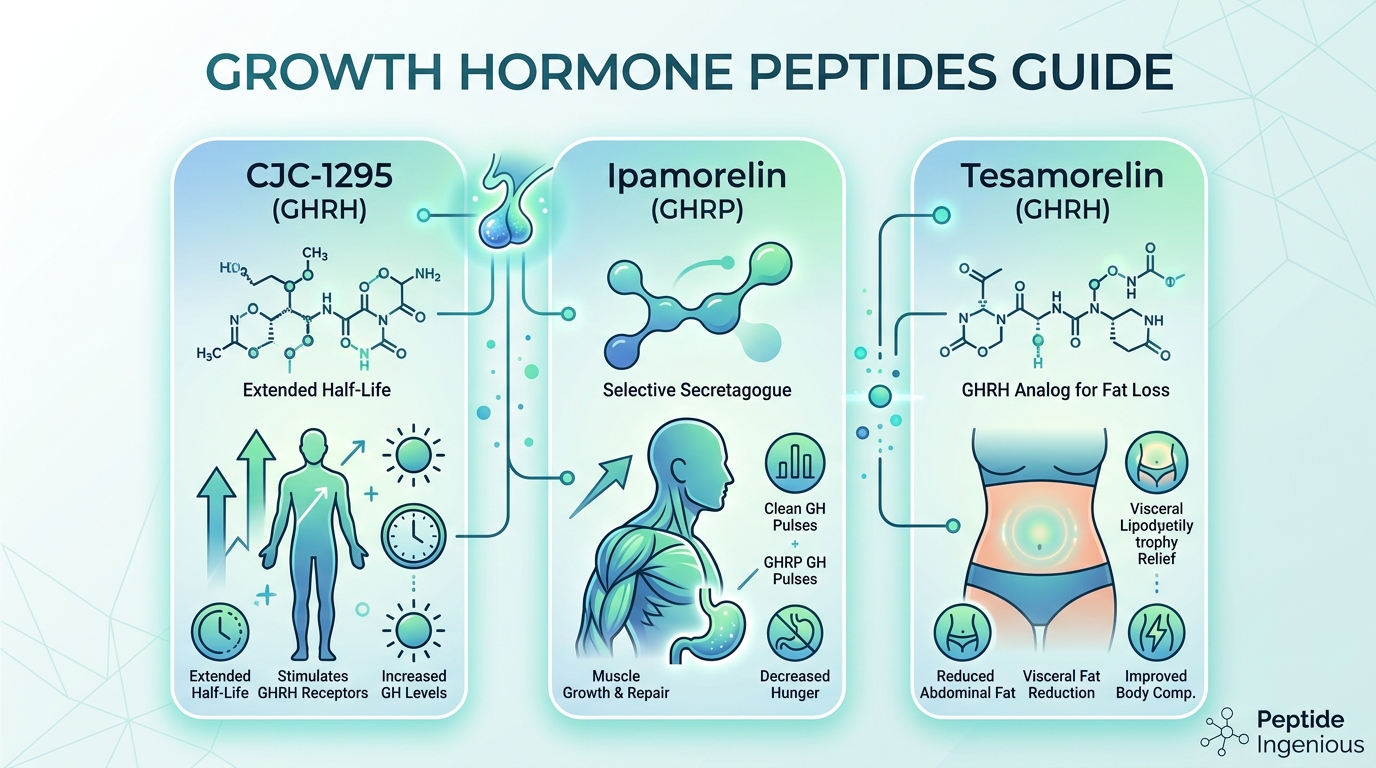
CJC-1295, ipamorelin, and tesamorelin are peptides investigated for their effects on growth hormone (GH) signaling. CJC-1295 and tesamorelin are growth hormone-releasing hormone (GHRH) analogs, while ipamorelin stimulates GH release through the ghrelin receptor. CJC-1295 has limited human pharmacology data, ipamorelin has limited clinical evidence, and tesamorelin has an FDA-approved indication for excess abdominal fat in adults with HIV-associated lipodystrophy. Their evidence, regulatory status, and safety profiles are not interchangeable.
Introduction
Growth hormone peptides have attracted considerable attention in discussions about body composition, muscle growth, recovery, and aging. Among the compounds frequently compared are CJC-1295, ipamorelin, and tesamorelin. Although all three can influence growth hormone signaling, they differ in their molecular structures, mechanisms, clinical evidence, and regulatory status.
CJC-1295 is a long-acting growth hormone-releasing hormone analog studied for its ability to increase circulating GH and insulin-like growth factor 1 (IGF-1). Ipamorelin is a growth hormone secretagogue that acts through the ghrelin receptor. Tesamorelin is another GHRH analog, but unlike CJC-1295 and ipamorelin, it has an FDA-approved medical indication supported by controlled clinical trials.
These distinctions matter because increased GH concentrations do not necessarily translate into greater muscle strength, healthier aging, or improved athletic performance. Similarly, a compound's ability to influence a biological pathway does not automatically establish that using it produces meaningful health benefits.
Online discussions also frequently combine these peptides into stacks or compare them with human growth hormone (HGH). Such comparisons can overlook differences in clinical research, potential adverse effects, and the standards required for FDA approval.
This guide examines what is known about each compound, how their mechanisms differ, what evidence supports their proposed applications, and where scientific uncertainty remains.
What Are Growth Hormone Peptides?
Growth hormone peptides are short chains of amino acids that can influence the body's growth hormone system. Some stimulate the pituitary gland to release GH, while others act on related hormonal pathways. Their biological effects depend on their molecular structures, receptor interactions, and the body's existing endocrine function.
The hypothalamus and pituitary gland work together to regulate GH secretion. The hypothalamus releases growth hormone-releasing hormone (GHRH), which stimulates the pituitary, while somatostatin inhibits GH release. Ghrelin and related signaling through the growth hormone secretagogue receptor, also called GHS-R1a, provide another stimulatory pathway.
GH is released naturally in pulses rather than at a constant level. Its secretion varies with sleep, age, nutrition, exercise, and other physiological factors. Once released, GH acts directly on various tissues and stimulates the production of IGF-1, particularly in the liver. IGF-1 contributes to cell growth, tissue development, and aspects of protein metabolism.
These hormones are interconnected, but they are not interchangeable. GH is a hormone administered directly in HGH medications, whereas CJC-1295, ipamorelin, and tesamorelin are intended to influence endogenous GH release.
How the GH signaling system works
- Hypothalamus
- GHRH stimulates; somatostatin inhibits
- Pituitary gland
- Releases growth hormone
- Growth hormone (GH)
- Acts on tissues and stimulates IGF-1 production
- IGF-1 and tissue responses
- Growth, metabolism, and tissue regulation
Simplified overview of the GH axis. CJC-1295 and tesamorelin influence GHRH-related signaling; ipamorelin acts through GHS-R1a.
Increasing GH signaling does not necessarily produce a desirable clinical outcome. The effects can depend on age, baseline hormone status, underlying health conditions, and the pattern and magnitude of hormonal changes. Increased lean body mass, for example, does not automatically indicate increased muscle strength.
This is why CJC-1295, ipamorelin, and tesamorelin should be assessed individually rather than treated as interchangeable growth hormone peptides.
What Is CJC-1295?
CJC-1295 is a modified, long-acting analog of growth hormone-releasing hormone. It was developed to stimulate pituitary GH secretion while extending the duration of exposure compared with shorter-acting GHRH fragments. Human research demonstrates that the original DAC-containing compound can increase GH and IGF-1 concentrations, but evidence of long-term clinical benefits remains limited.
How does CJC-1295 work?
CJC-1295 is designed to activate GHRH-related signaling at the pituitary gland. GHRH normally binds to receptors on pituitary somatotroph cells, prompting them to release GH. CJC-1295 is a modified analog intended to produce a more prolonged hormonal response.
The original CJC-1295 studied in humans contains a Drug Affinity Complex (DAC). This modification allows the compound to bind to circulating albumin, extending its persistence in the body. In a randomized, placebo-controlled study published in 2006, researchers investigated CJC-1295 in healthy adults aged 21–61.
Following a single administration, the study reported dose-dependent increases in mean GH concentrations that lasted at least several days. IGF-1 concentrations also increased and remained elevated longer than the initial GH response. The estimated half-life of the tested compound was approximately 5.8–8.1 days. These were endocrine measurements, not demonstrations of improvements in strength, muscle growth, athletic performance, or healthy aging.
CJC-1295 with DAC versus without DAC
The distinction between CJC-1295 with DAC and products advertised as CJC-1295 without DAC is important.
The published human pharmacokinetic research generally referred to the long-acting DAC-containing compound. By contrast, the term CJC-1295 without DAC is widely used in commercial settings for modified GRF(1-29), a related but structurally different peptide. Evidence from the DAC-containing compound should not automatically be applied to modified GRF(1-29).
Without the DAC modification, the pharmacological profile differs substantially. The human evidence for CJC-1295 with DAC does not establish the efficacy or safety of the product commonly sold as the no-DAC form.
What is CJC-1295 used for?
CJC-1295 has been studied for its ability to increase GH and IGF-1. It is also discussed online in connection with body composition, muscle growth, and anti-aging. However, it is not an FDA-approved drug for those purposes or for any other medical indication.
The available human studies establish that the DAC-containing compound can modify hormone concentrations under controlled research conditions. They do not establish a generally accepted therapeutic use or adequately define its long-term risk profile.
What Is Ipamorelin?
Ipamorelin is a synthetic growth hormone secretagogue. Unlike CJC-1295 and tesamorelin, which act through GHRH-related signaling, ipamorelin stimulates GH release by activating the growth hormone secretagogue receptor, also known as the ghrelin receptor. Its demonstrated effects on GH release do not establish benefits for muscle growth or anti-aging.
How does ipamorelin work?
Ipamorelin belongs to a group of compounds called growth hormone-releasing peptides. It activates GHS-R1a, a receptor involved in the body's response to ghrelin and certain synthetic secretagogues.
This pathway is distinct from the GHRH receptor pathway. Both can stimulate GH release, and research into human physiology indicates that GHRH and ghrelin-related signaling may interact. However, the activity of the natural signaling systems does not prove that combining two synthetic compounds produces a safe or clinically useful effect.
What does human research show?
A pharmacokinetic and pharmacodynamic study investigated ipamorelin in healthy male volunteers. Researchers observed a transient increase in GH following intravenous administration. The study provided evidence about the compound's pharmacological activity but did not establish long-term treatment benefits.
Ipamorelin has also been investigated for its potential to improve gastrointestinal motility, including in the context of postoperative ileus. However, this research has not established ipamorelin as an FDA-approved treatment.
FDA has identified safety concerns associated with compounded ipamorelin acetate, including potential immunogenicity and peptide-related impurities. It also cited serious adverse events, including deaths, reported in an intravenous study involving critically ill patients. These findings are specific to the evidence and circumstances discussed by the agency; they should not be interpreted as a quantified risk for every formulation or route.
Ipamorelin is not FDA-approved for muscle growth, anti-aging, or general GH optimization. Evidence about its ability to stimulate GH release should not be confused with proof of clinical effectiveness.
What Is Tesamorelin?
Tesamorelin is a synthetic growth hormone-releasing factor analog that stimulates endogenous GH secretion and increases IGF-1. It differs from CJC-1295 in its structure and evidence base. Tesamorelin is FDA-approved under the Egrifta product names for reducing excess abdominal fat in adults with HIV-associated lipodystrophy, but it is not approved as a general weight-loss or anti-aging treatment.
How does tesamorelin work?
Tesamorelin is structurally related to GHRH and stimulates GH release from the pituitary gland. The increased GH signaling can influence IGF-1 production and fat metabolism.
The FDA-approved medication Egrifta has a specific clinical indication: reducing excess abdominal fat in adults with HIV-associated lipodystrophy. This condition can involve abnormal fat distribution associated with HIV infection and its treatment. It is distinct from ordinary overweight or obesity.
What does clinical research demonstrate?
Tesamorelin has been studied in randomized, placebo-controlled trials involving adults with HIV-associated abdominal fat accumulation. In a major 2007 trial, participants receiving tesamorelin experienced a reduction in visceral adipose tissue, while the placebo group experienced an increase over the study period. The findings helped establish the clinical evidence for its approved use.
Additional research has examined its effects on visceral and liver fat in people with HIV-associated abdominal adiposity. These studies provide evidence for particular outcomes in selected populations, but they do not establish that tesamorelin produces equivalent results in healthy adults or that it is a general treatment for obesity.
What are its limitations and safety considerations?
The FDA-approved prescribing information states that tesamorelin is not indicated for weight management because of its weight-neutral effect. Its label also identifies important concerns involving elevated IGF-1, glucose intolerance or diabetes, fluid retention, hypersensitivity, and malignancy. It is contraindicated in people with active malignancy, pregnancy, certain disruptions of the hypothalamic-pituitary axis, or known hypersensitivity to the product.
Tesamorelin's approved indication is an important distinction, but approval for one specific medical use does not establish that it is effective or appropriate for bodybuilding, general fat loss, or anti-aging.
CJC-1295 vs. Ipamorelin vs. Tesamorelin: Key Differences
CJC-1295, ipamorelin, and tesamorelin all influence growth hormone signaling, but they act through different mechanisms and have substantially different clinical evidence. Their comparison involves more than how much GH they can stimulate: regulatory approval, the populations studied, treatment outcomes, and safety data all affect what can reasonably be concluded.
| Feature | CJC-1295 | Ipamorelin | Tesamorelin |
|---|---|---|---|
| Compound classification | Modified, long-acting GHRH analog when referring to the original DAC form | Synthetic GH secretagogue | Synthetic GHRH analog |
| Primary mechanism | Activates GHRH-related signaling | Activates the ghrelin receptor (GHS-R1a) | Activates GHRH-related signaling |
| Relationship with GH | Prolonged stimulation of endogenous GH in early human studies | Stimulates GH release in pharmacological studies | Stimulates endogenous GH and increases IGF-1 |
| Human research | Small controlled pharmacology studies | Limited human pharmacology and investigational clinical research | Multiple controlled clinical trials for a specific indication |
| FDA-approved indication | None | None | Reduction of excess abdominal fat in adults with HIV-associated lipodystrophy |
| Main research limitations | Limited clinical outcomes and long-term safety data | Limited evidence for sustained clinical benefits | Approved evidence is specific to its labeled indication |
| Important safety considerations | FDA has identified serious adverse events and formulation-related concerns | FDA has identified immunogenicity and formulation concerns, and cited serious events in an intravenous study | Label identifies risks involving IGF-1, glucose, fluid retention, and malignancy |
Mechanism is not the same as clinical effectiveness
CJC-1295 and tesamorelin both influence GHRH-related signaling. Ipamorelin works through a different receptor. These biological differences help explain why researchers study the compounds separately.
However, neither the strength of a hormonal response nor the mechanism of action can independently determine whether a peptide is clinically useful. A compound might increase GH without producing measurable improvements in muscle strength or long-term health.
Why their regulatory status matters
Tesamorelin has an FDA-approved indication backed by human clinical trials. CJC-1295 and ipamorelin do not have comparable FDA-approved indications. The FDA has also identified safety concerns involving certain compounded preparations containing CJC-1295 and ipamorelin acetate.
Therefore, comparing ipamorelin vs. tesamorelin, tesamorelin vs. CJC-1295, or CJC-1295 vs. ipamorelin requires attention to the specific outcome being discussed. There is no established clinical basis for declaring one universally superior to the others.
CJC-1295 and Ipamorelin: Why Are They Commonly Combined?
CJC-1295 and ipamorelin are frequently discussed together because they influence GH release through different signaling pathways. Researchers may find the interaction between GHRH and ghrelin-receptor pathways biologically interesting, but there is insufficient clinical evidence to establish that combining these particular peptides produces greater benefits or acceptable long-term safety.
The theoretical rationale for the combination comes from the body's own endocrine system. GHRH stimulates pituitary GH release, while ghrelin-related signaling provides another stimulatory input. Experimental physiology indicates that these pathways can work together.
CJC-1295 is designed to influence GHRH signaling. Ipamorelin activates GHS-R1a. Because the pathways differ, the combination is often described online as a way of influencing two inputs into the same hormonal system.
However, a plausible mechanism is not proof of synergy. Synergy would mean that the combination produces a benefit beyond what would be expected from the individual compounds. Demonstrating that requires controlled studies that compare the combination with the individual substances and an appropriate control.
What evidence supports the combination?
The principal human research for CJC-1295 has examined its individual effects on GH and IGF-1. Human studies of ipamorelin have likewise focused on its own pharmacological effects or specific investigational applications. These studies do not establish the efficacy of the CJC-1295 and ipamorelin combination.
There is also a distinction between an experimental mixture and a clinically studied combination. A product containing both ingredients does not become an evidence-based treatment simply because each ingredient has been studied separately.
Questions about CJC-1295 ipamorelin combinations therefore remain unresolved. Available evidence does not establish clinically meaningful improvements in muscle growth, recovery, body composition, or anti-aging outcomes from using both substances together.
What about safety?
Combining compounds that influence the same hormonal system introduces uncertainties. Their combined effects on GH and IGF-1 may differ from those observed in studies of either compound alone. Potential adverse effects may also be harder to attribute to one ingredient when a combination is used.
The FDA has raised concerns involving CJC-1295 and ipamorelin acetate in compounded preparations, including immunogenicity and peptide characterization. These concerns are relevant when evaluating the safety of products marketed as CJC/ipamorelin blends.
Theoretical differences in receptor signaling do not establish that the combination is safer or more effective than either compound individually.
Can Tesamorelin and CJC-1295 Be Used Together?
Tesamorelin and CJC-1295 both influence GHRH-related signaling. Their overlapping biological mechanisms make the combination a subject of online interest, but there is no established clinical evidence showing that using both together provides additional benefits or an acceptable safety profile.
Although the compounds are not chemically identical, they act on a related part of the GH regulatory system. Tesamorelin is a clinically characterized GHRH analog with a specific FDA-approved indication. CJC-1295 is a long-acting analog investigated primarily for its effects on GH and IGF-1 concentrations.
Combining them could theoretically change the intensity or duration of hormonal stimulation. However, a theoretical increase in signaling does not establish better clinical outcomes.
Is there evidence for the combination?
The clinical evidence for tesamorelin largely concerns its use in adults with HIV-associated lipodystrophy. CJC-1295 research has primarily examined pharmacological changes in circulating hormones in controlled studies involving healthy adults. These separate evidence bases cannot demonstrate that the two drugs work better together.
Adequate controlled human trials establishing the combined safety or clinical effectiveness of tesamorelin and CJC-1295 have not been established in the evidence reviewed here.
Why could overlapping GH signaling matter?
GH and IGF-1 participate in several physiological processes, including tissue growth and glucose regulation. Increasing signaling through overlapping pathways does not necessarily produce a proportional improvement in a desired outcome.
The safety concerns associated with elevated IGF-1, glucose intolerance, fluid retention, and other hormonal effects are particularly relevant when considering more than one GH-stimulating compound. Tesamorelin's prescribing information identifies several of these concerns for its approved formulation. The long-term effects of combining it with CJC-1295 are not established.
There is consequently no adequate clinical basis for endorsing tesamorelin and CJC-1295 together.
Can You Take CJC-1295, Ipamorelin, and Tesamorelin Together?
CJC-1295, ipamorelin, and tesamorelin are sometimes marketed or discussed as a three-peptide stack. However, evidence that individual compounds influence GH signaling does not establish that their combined use is safe, effective, or synergistic. Adequate human studies evaluating the full three-compound combination are lacking.
The proposed rationale usually involves influencing more than one pathway regulating GH. CJC-1295 and tesamorelin are GHRH analogs, whereas ipamorelin acts through GHS-R1a. Combining them is sometimes presented as a way of creating broader stimulation of the GH system.
There are several limitations to this reasoning.
- Tesamorelin and CJC-1295 have overlapping GHRH-related mechanisms. Using two related stimulatory compounds does not automatically provide two independent clinical benefits. The response could be additive, unpredictable, or limited by normal endocrine feedback.
- The presence of ipamorelin introduces another receptor-mediated effect without resolving the lack of evidence for the entire combination. Even if the pathways interact physiologically, a specific three-compound blend requires its own clinical investigation.
- The composition of marketed blends may differ. A name such as a CJC-1295/ipamorelin/tesamorelin stack does not establish its chemical identity, pharmaceutical quality, stability, or clinical performance. Products advertised with labels such as no DAC or a stated total blend strength should not be assumed to have been evaluated in human clinical trials.
The safety implications also require attention. A combination that alters GH and IGF-1 through multiple mechanisms could make it difficult to determine which component contributes to a particular adverse effect. There is also insufficient evidence to characterize possible cumulative endocrine effects or long-term outcomes.
A three-peptide blend should therefore be considered an unvalidated combination rather than an established medical therapy. Neither a product listing nor anecdotal experiences demonstrate that it produces clinically meaningful benefits.
Does CJC-1295 or Ipamorelin Support Muscle Growth?
CJC-1295 and ipamorelin are often discussed in bodybuilding because both can stimulate GH signaling. However, evidence that they increase GH does not establish that they reliably increase muscle size, strength, or athletic performance in healthy adults. Direct clinical evidence supporting meaningful muscle growth from either peptide remains inadequate.
GH influences protein metabolism, connective tissues, and body composition. IGF-1 also contributes to growth and tissue regulation. These biological roles help explain why compounds that stimulate GH release attract interest in sports and fitness.
However, lean body mass is not identical to functional muscle. Changes in lean mass can reflect several components of the body, including water and other non-fat tissues. A measured increase does not necessarily demonstrate greater contractile muscle tissue or improved performance.
Evidence from studies of administered HGH offers useful context, although it cannot be transferred directly to CJC-1295 or ipamorelin. A systematic review and meta-analysis of controlled studies in healthy, young adults found that GH administration increased lean body mass and reduced fat mass, but did not significantly improve muscle strength or aerobic exercise capacity.
That finding illustrates why hormone levels and body composition should not be treated as interchangeable outcomes.
CJC-1295 has human evidence showing increased circulating GH and IGF-1, but its original trials were not designed to establish bodybuilding benefits. Ipamorelin's clinical evidence is also insufficient to establish reliable improvements in muscle hypertrophy or physical performance.
Consequently, claims about CJC-1295 for muscle growth or CJC-1295 and ipamorelin for muscle growth go beyond what the available clinical evidence can demonstrate.
Tesamorelin vs. HGH: What Are the Differences?
Tesamorelin and HGH both influence the GH system, but they do so differently. Tesamorelin stimulates the body's endogenous GH release through GHRH-related signaling, whereas pharmaceutical HGH supplies recombinant growth hormone directly. Their clinical evidence and approved indications also differ.
HGH is recombinant human growth hormone. It is structurally equivalent to endogenous human GH and acts directly on GH receptors. Certain HGH products have FDA-approved indications for specific medical conditions, including particular forms of growth failure and adult GH deficiency.
Tesamorelin stimulates the pituitary to release the body's own GH. It subsequently increases IGF-1 and has been studied for the reduction of visceral fat in adults with HIV-associated lipodystrophy. Its FDA-approved indication is limited to that particular clinical context.
The distinction becomes particularly important when comparing tesamorelin vs. HGH for weight loss or muscle growth. Tesamorelin's approved indication does not establish that it treats general obesity. Likewise, the approval of certain HGH products for specific medical conditions does not mean that HGH is approved for bodybuilding or general anti-aging.
The safety considerations also differ. Both approaches can influence GH and IGF-1 signaling, but individual products have their own clinical evidence and prescribing information. Tesamorelin's label specifically identifies concerns involving fluid retention, glucose intolerance, elevated IGF-1, and malignancy. HGH also has important safety considerations, depending on the product and its approved use.
Comparisons between HGH and tesamorelin should therefore be based on the medical condition and evidence in the relevant patient population, not on generalized claims about which produces greater hormone levels.
Low-Dose HGH vs. CJC-1295 and Ipamorelin for Anti-Aging
Low-dose HGH and CJC-1295/ipamorelin combinations are frequently discussed in anti-aging content because they influence the GH–IGF-1 system. However, there is no established clinical evidence that either approach reverses biological aging or reliably extends healthy lifespan in otherwise healthy adults.
Biological aging encompasses changes in cellular function, tissue maintenance, immune regulation, and the risk of age-related disease. It is much broader than changes in body composition or circulating hormone levels.
Some age-related changes in GH secretion have led researchers to investigate whether modifying GH signaling could affect body composition and other physiological outcomes. However, an increase in GH or IGF-1 is not itself evidence that the aging process has been slowed.
Research involving HGH in healthy older adults provides an important caution. A systematic review of controlled studies reported modest changes in body composition but also identified increased adverse events, including edema, joint symptoms, and carpal tunnel syndrome. The authors concluded that the evidence did not support GH as an anti-aging therapy.
CJC-1295 has demonstrated hormonal effects in small human studies, but there is no adequate evidence that it improves longevity, prevents age-related diseases, or reverses biological aging. Comparable claims about CJC-1295 and ipamorelin together also lack sufficient controlled clinical evidence.
Regulatory status matters here as well. The FDA identifies anti-aging and bodybuilding as unauthorized uses for HGH distribution under applicable federal law. Its approval for certain medical conditions does not confer approval for general age-management purposes.
Therefore, claims comparing low-dose HGH vs. CJC-1295/ipamorelin for anti-aging should be treated as speculative rather than as established clinical comparisons.
Does CJC-1295 and Ipamorelin Increase Testosterone?
CJC-1295 and ipamorelin primarily target GH-related signaling, not the testosterone production pathway. Although the endocrine systems interact, increased GH does not necessarily mean increased testosterone. Available evidence does not establish a reliable testosterone-enhancing or testosterone-suppressing effect for the combination.
Testosterone is regulated mainly through the hypothalamic-pituitary-gonadal axis. The process involves gonadotropin-releasing hormone, luteinizing hormone, and the testes. GH secretion is regulated through different primary signals, including GHRH and ghrelin-related pathways.
Because these systems are interconnected with broader metabolism and endocrine function, it is possible for changes in one hormonal pathway to influence others under particular circumstances. However, that possibility is not sufficient to establish a predictable testosterone response to a peptide.
The clinical research on CJC-1295 and ipamorelin is not sufficient to confirm that the combination raises testosterone, prevents testosterone suppression, or improves symptoms associated with low testosterone.
Searches for an ipamorelin testosterone suppression study should be interpreted carefully. A study of another growth hormone secretagogue, or an observation involving a different peptide combination, cannot automatically establish ipamorelin's effects on testosterone.
Claims that CJC-1295 and ipamorelin reliably improve testosterone levels therefore remain unsupported by adequate clinical evidence.
How Do Other Growth Hormone Peptides Compare?
Other peptides sometimes appear alongside CJC-1295, ipamorelin, and tesamorelin in comparison searches. However, they may target different biological pathways, have different levels of evidence, or be investigational rather than clinically established treatments.
| Compound | Primary pathway or role | Important distinction |
|---|---|---|
| Sermorelin | GHRH fragment that stimulates GH release | Related to GHRH signaling, but distinct from CJC-1295 and tesamorelin |
| GHRP-2 | Growth hormone secretagogue acting through the ghrelin receptor | Shares a broad receptor pathway with ipamorelin but is a different compound |
| MOTS-c | Mitochondrial-derived peptide studied in metabolic research | Not a conventional GHRH analog or established GH secretagogue |
| IGF-1 LR3 | Modified, long-acting IGF-1 analog | Acts downstream of GH release rather than stimulating the same pituitary pathway |
Sermorelin and tesamorelin are related to GHRH, whereas ipamorelin and GHRP-2 belong to the broader category of GH secretagogues. Nevertheless, their individual pharmacology and clinical evidence should be assessed separately.
MOTS-c has attracted interest in metabolism and exercise research, but its proposed effects should not be equated with those of established GHRH analogs. IGF-1 LR3 is a modified growth factor rather than a conventional GH-releasing peptide. Comparisons involving it therefore concern a different point in the hormonal pathway.
These distinctions are particularly relevant to queries such as GHRP-2 vs. ipamorelin, MOTS-c vs. tesamorelin, or IGF-1 LR3 vs. CJC-1295/ipamorelin. Similar marketing categories do not necessarily indicate similar mechanisms, regulatory status, or clinical evidence.
What Should You Know About CJC-1295 Dosing and Timing?
There is no universally validated self-administration protocol for unapproved CJC-1295 use. The appropriate clinical context depends on the exact compound, formulation, medical indication, and supporting evidence. Online dosage charts and anecdotal schedules do not establish safety or effectiveness.
The distinction between DAC-containing CJC-1295 and products marketed as CJC-1295 without DAC is particularly important. They have different pharmacological properties, and research involving one form cannot automatically support dosing or timing claims for the other.
Searches for CJC-1295 dosage per week, CJC-1295 and ipamorelin dosing, or when to take CJC-1295 often lead to protocols shared on commercial websites and discussion forums. These should not be confused with validated clinical regimens.
The available CJC-1295 studies investigated hormonal responses under controlled research conditions. They do not establish a generally accepted dosing schedule for bodybuilding, muscle growth, or anti-aging. There is also insufficient clinical evidence to determine a safe and effective dosing schedule for combining CJC-1295 with ipamorelin or tesamorelin.
Tesamorelin is different because its FDA-approved formulations have prescribing information for its specific medical indication. Those instructions apply to the approved products and their labeled use, not to unapproved peptide mixtures or experimental combinations.
Anyone encountering dosing or timing claims should distinguish published clinical protocols from self-administration advice. Decisions involving hormonal treatments require assessment by qualified healthcare professionals rather than reliance on generalized online schedules.
Is CJC-1295 Safe?
CJC-1295 has demonstrated the ability to increase GH and IGF-1 in small controlled human studies, but these studies do not establish its long-term safety. The FDA has also identified serious adverse events and potential quality-related risks associated with CJC-1295 preparations used in compounding.
In the early human trials, CJC-1295 was generally described as tolerated over the relatively short study periods. However, the absence of serious adverse reactions in those trials does not establish that every formulation is safe or that longer-term exposure has an acceptable risk profile.
The FDA subsequently identified serious adverse events associated with CJC-1295, including increased heart rate and a systemic vasodilatory reaction. The agency also highlighted potential immunogenicity for certain routes of administration and difficulties involving peptide-related impurities and active pharmaceutical ingredient characterization. Available clinical data remain limited.
Several uncertainties deserve particular attention:
- GH and IGF-1: Increasing these hormones can affect multiple physiological systems. The consequences of prolonged or excessive stimulation require careful evaluation.
- Cardiovascular effects: FDA has identified reports of increased heart rate and systemic vasodilatory reactions associated with CJC-1295.
- Immunogenicity: Peptides can produce immune responses, and the clinical significance of these risks depends partly on their structure and formulation.
- Product quality: An unapproved or improperly manufactured product may contain impurities or have an uncertain chemical identity.
- Long-term exposure: The available research does not establish the long-term safety of CJC-1295 for general wellness or bodybuilding.
Safety findings for tesamorelin should not be used as a substitute for CJC-1295-specific evidence. Likewise, the safety of a single peptide cannot establish the safety of a multi-compound stack.
What Does the Evidence Actually Support?
The evidence supports several distinct conclusions. GH physiology and the mechanisms of the three compounds are reasonably well characterized, but the clinical evidence varies significantly. Tesamorelin has an approved, condition-specific use, whereas the evidence for CJC-1295 and ipamorelin is insufficient to establish comparable therapeutic benefits.
| Compound or Combination | Human Evidence | Evidence for Muscle Growth | Evidence for Anti-Aging | Main Limitation |
|---|---|---|---|---|
| CJC-1295 | Controlled human studies demonstrate increased GH and IGF-1 with the DAC form. | Insufficient evidence of meaningful muscle growth. | No established anti-aging benefit. | Small, short-term pharmacology trials and limited long-term safety data. |
| Ipamorelin | Human pharmacology research demonstrates GH release; other clinical research is limited. | Insufficient evidence of meaningful muscle growth. | No established anti-aging benefit. | Limited therapeutic efficacy and safety evidence. |
| Tesamorelin | Controlled trials support its approved HIV-associated lipodystrophy indication. | Not established as a muscle-growth treatment. | No established general anti-aging benefit. | Approved benefits apply to a specific condition and population. |
| CJC-1295 + Ipamorelin | No adequate clinical evidence establishing the combination's therapeutic effectiveness. | No established combination benefit. | No established combination benefit. | Theoretical interaction is not proof of synergy. |
| Tesamorelin + CJC-1295 | Adequate controlled combination evidence is lacking. | No established combination benefit. | No established combination benefit. | Overlapping GHRH-related signaling and uncertain combined safety. |
| CJC-1295 + Ipamorelin + Tesamorelin | No adequate human evidence establishing the full combination. | No established combination benefit. | No established combination benefit. | Clinical efficacy, interactions, and long-term safety are unestablished. |
The most substantial clinical evidence among these three peptides belongs to tesamorelin, but its evidence is specific to HIV-associated lipodystrophy. CJC-1295 has demonstrated hormonal effects in controlled human research without establishing corresponding improvements in physical performance or longevity. Ipamorelin has evidence of GH-releasing activity, but its potential clinical applications and safety remain inadequately characterized.
No individual-compound findings establish the clinical effectiveness of a combination. Similarly, changes in GH or IGF-1 should not be interpreted as evidence of improved health, muscle strength, or lifespan.
For readers evaluating growth hormone peptides, the most useful distinction is between demonstrated hormonal activity, proven clinical outcomes, and claims that remain speculative.
FAQs (Frequently Asked Questions)
What Is CJC-1295?
CJC-1295 is a modified growth hormone-releasing hormone analog developed to stimulate pituitary GH release. The original DAC-containing form has been studied in humans and can increase GH and IGF-1 concentrations. It is not FDA-approved for muscle growth, anti-aging, or any other medical indication.
What Is CJC-1295 Used For?
CJC-1295 has been investigated for its ability to stimulate GH and IGF-1 secretion. It is also discussed in connection with bodybuilding and anti-aging, but those uses lack adequate clinical evidence. Unlike tesamorelin, CJC-1295 does not have an FDA-approved medical indication.
What Is the Difference Between CJC-1295 and Ipamorelin?
CJC-1295 is a modified GHRH analog that stimulates GH release through GHRH-related signaling. Ipamorelin is a GH secretagogue that activates the ghrelin receptor. Both can influence GH secretion, but their mechanisms differ, and neither has established clinical benefits for general muscle growth or anti-aging.
Is Tesamorelin Better Than CJC-1295?
There is no universal clinical basis for declaring tesamorelin better than CJC-1295. Tesamorelin has FDA-approved use for a specific medical condition, whereas CJC-1295 remains investigational. Their evidence applies to different clinical questions, so comparisons need to account for the intended outcome and the population studied.
Can You Take CJC-1295 and Ipamorelin Together?
The combination is commonly discussed because the compounds influence different GH-related signaling pathways. However, the biological rationale does not establish clinical synergy. Adequate evidence demonstrating the combination's effectiveness and long-term safety is lacking, and the safety findings for each compound cannot automatically validate their combined use.
Can You Take CJC-1295, Ipamorelin, and Tesamorelin Together?
There is insufficient clinical evidence to establish the safety or effectiveness of the three-peptide combination. CJC-1295 and tesamorelin have overlapping GHRH-related mechanisms, while ipamorelin acts through another receptor. Using all three introduces additional uncertainty about hormonal effects, interactions, and adverse-event assessment.
Does CJC-1295 Help With Muscle Growth?
Human research demonstrates that DAC-containing CJC-1295 increases GH and IGF-1 concentrations, but that does not establish muscle hypertrophy. There is insufficient controlled clinical evidence showing that CJC-1295 reliably improves muscle size, strength, or athletic performance in healthy adults.
Does CJC-1295 Increase Testosterone?
CJC-1295 primarily influences GH-related signaling rather than the testosterone production pathway. There is insufficient evidence to establish that it reliably increases testosterone or prevents testosterone suppression. Changes in GH concentrations should not be interpreted as proof of a predictable change in testosterone.
Is CJC-1295 Safe?
The long-term safety of CJC-1295 has not been established. Early human studies demonstrated hormonal effects but were limited in duration. The FDA has subsequently identified serious adverse events, potential immunogenicity, and peptide-quality concerns associated with CJC-1295 preparations. Its safety cannot be assumed from limited early research.
How Is Tesamorelin Different From HGH?
Tesamorelin stimulates the body's own GH release by acting through GHRH-related signaling. HGH is recombinant growth hormone administered directly. Tesamorelin has a specific FDA-approved indication for HIV-associated lipodystrophy, while HGH products have their own approved indications. Their uses and safety profiles are not interchangeable.
Is Low-Dose HGH Better Than CJC-1295 and Ipamorelin for Anti-Aging?
Neither approach has established efficacy as a general anti-aging treatment. Research involving HGH in healthy older adults has found limited changes in body composition alongside adverse effects. There is insufficient clinical evidence to conclude that CJC-1295 and ipamorelin provide meaningful benefits for biological aging.
What Is the Difference Between CJC-1295 With DAC and Without DAC?
The original CJC-1295 studied in human trials contains a Drug Affinity Complex that binds to albumin and extends its duration of action. Products marketed as CJC-1295 without DAC commonly refer to modified GRF(1-29), a different form with a distinct pharmacological profile. Human findings for the original compound should not automatically be applied to the no-DAC form.
What Is CJC-1295?
CJC-1295 is a modified growth hormone-releasing hormone analog that stimulates the pituitary gland to release growth hormone. Its original DAC-containing form can increase GH and IGF-1 concentrations, according to limited human research. It is not FDA-approved for bodybuilding, muscle growth, anti-aging, or any other medical indication.
Medical Disclaimer
This article is intended for educational and informational purposes only. It does not provide medical advice, establish a diagnosis, or recommend the use of CJC-1295, ipamorelin, tesamorelin, HGH, or any peptide combination. Experimental findings should not be interpreted as proof of clinical effectiveness. Consult a qualified healthcare professional about medical conditions, hormone-related concerns, and treatment decisions. For FDA-approved medications, refer to the current prescribing information and advice from the prescribing clinician.